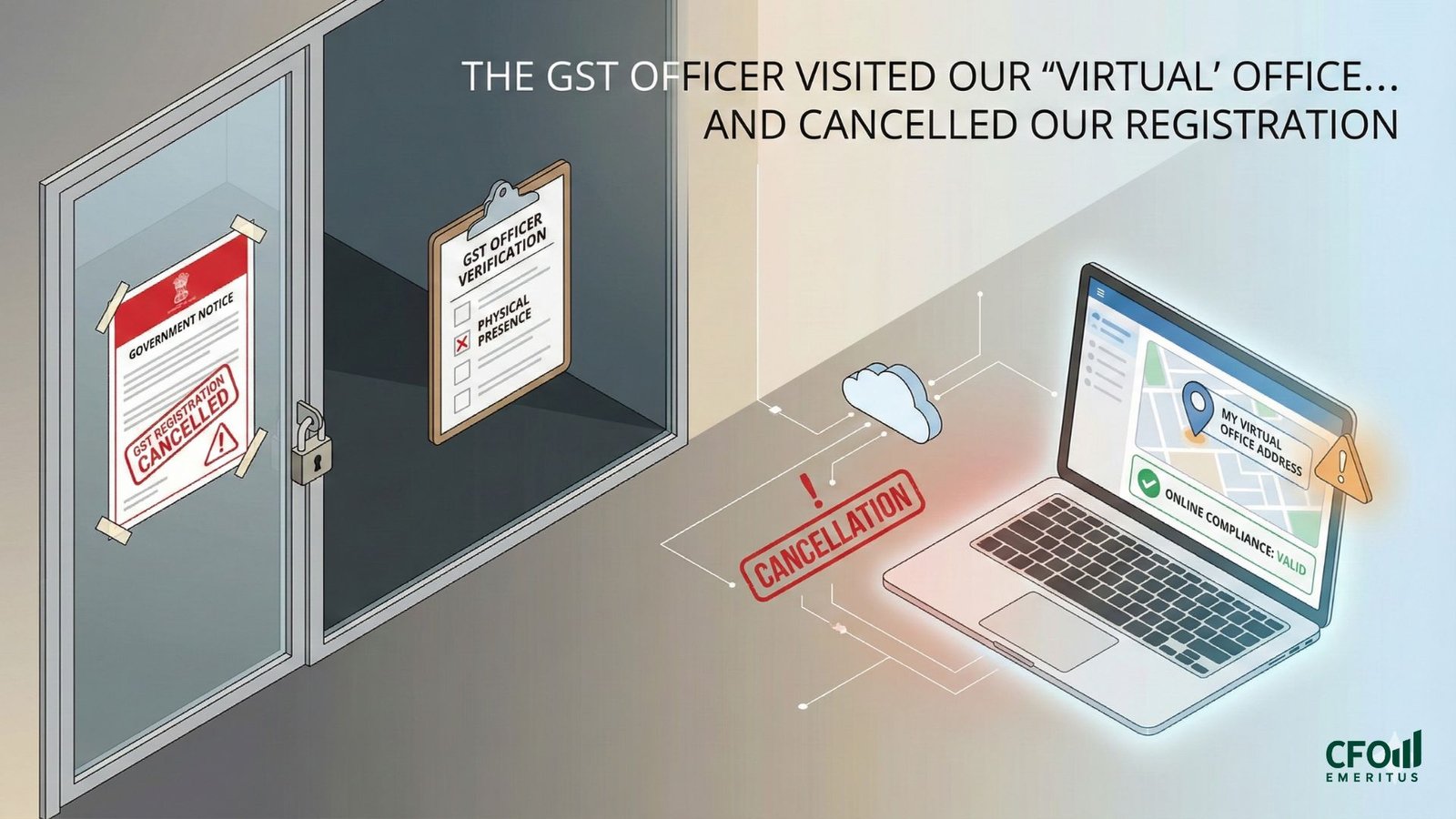
Imagine logging into your GST portal to file a return, only to see this status: “Cancelled Suo Moto.”
Reason? “Principal place of business found non-existent during physical verification.”
This is a real nightmare scenario we are seeing more frequently. Founders love Virtual Offices. They are cheap (₹1,000/month), easy to set up, and give you a prime address for registration.
But here is the hard truth: The GST Department hates them.
To an officer, a 2×2 ft desk where no one sits looks exactly like a shell company used for fake invoicing.
If you are running your startup from a Virtual Office or a “flexible desk” at a coworking space, you are walking on thin ice.
Here is why they get cancelled—and how to protect yours.
🕵️ The “Physical Verification” Surprise
Under Rule 25 of the CGST Rules, a GST officer can visit your registered office without prior intimation to verify if you actually exist.
When they visit a “Virtual Office,” they often find:
-
A receptionist who has no idea who your company is.
-
No name board or branding.
-
No books of accounts or documents at the premises.
-
No authorized person to answer questions.
Result? They assume the business is fake. They snap a photo of the empty desk/lobby, upload it to the portal, and cancel your registration instantly.
Once cancelled, your bank freezes accounts, vendors stop payments, and reactivation can take months of appeals.
🛡️ How to Survive a “Virtual Office” Audit
You can legally operate from a coworking space or shared office, but you cannot be invisible. If you use such an address, you MUST ensure these 4 things are in place today:
1. The Name Board Rule (Non-Negotiable)
The law mandates that your Company Name and GSTIN must be displayed at the entrance.
-
In a coworking space: Ensure your name is on the lobby directory or pasted on your specific desk/cabin.
-
Why: If the officer can’t see your name, you don’t exist.
2. The “Authorized Person” Protocol
The receptionist must know you. If an officer asks, “Does XYZ Pvt Ltd operate here?”, the answer cannot be “I don’t know.” Ensure the community manager has your details and knows to call you immediately if an officer arrives.
3. Documents on Site
Even if you work from home, your registered office must have:
-
GST Certificate (Displayed or in a file).
-
Rent/Membership Agreement (Current, not expired).
-
NOC from the landlord/space provider.
4. Digital Access to Books
If the officer asks for books of accounts, you can’t say, “My CA has them.” You must be able to login to your cloud accounting software (Zoho/Tally/QuickBooks) and show them live business activity immediately.
🎯 Final Thought
Saving ₹10,000 on rent is smart. Losing your business license to save that rent is suicide.
A Virtual Office is a compliance arrangement, not just a mailing address. Treat it with respect, or the department will treat you like a ghost.
At CFO Emeritus, we ensure our clients’ registered offices—whether physical or virtual—are audit-ready 24/7.
📩 Is your office compliant? Don’t wait for the surprise visit. If you are unsure, let’s review your setup. Write to us at office@cfoemeritus.com