If you’re raising funds in India, chances are you’ve heard the phrase “Angel Tax.”
It’s dreaded, confusing, and often misunderstood.
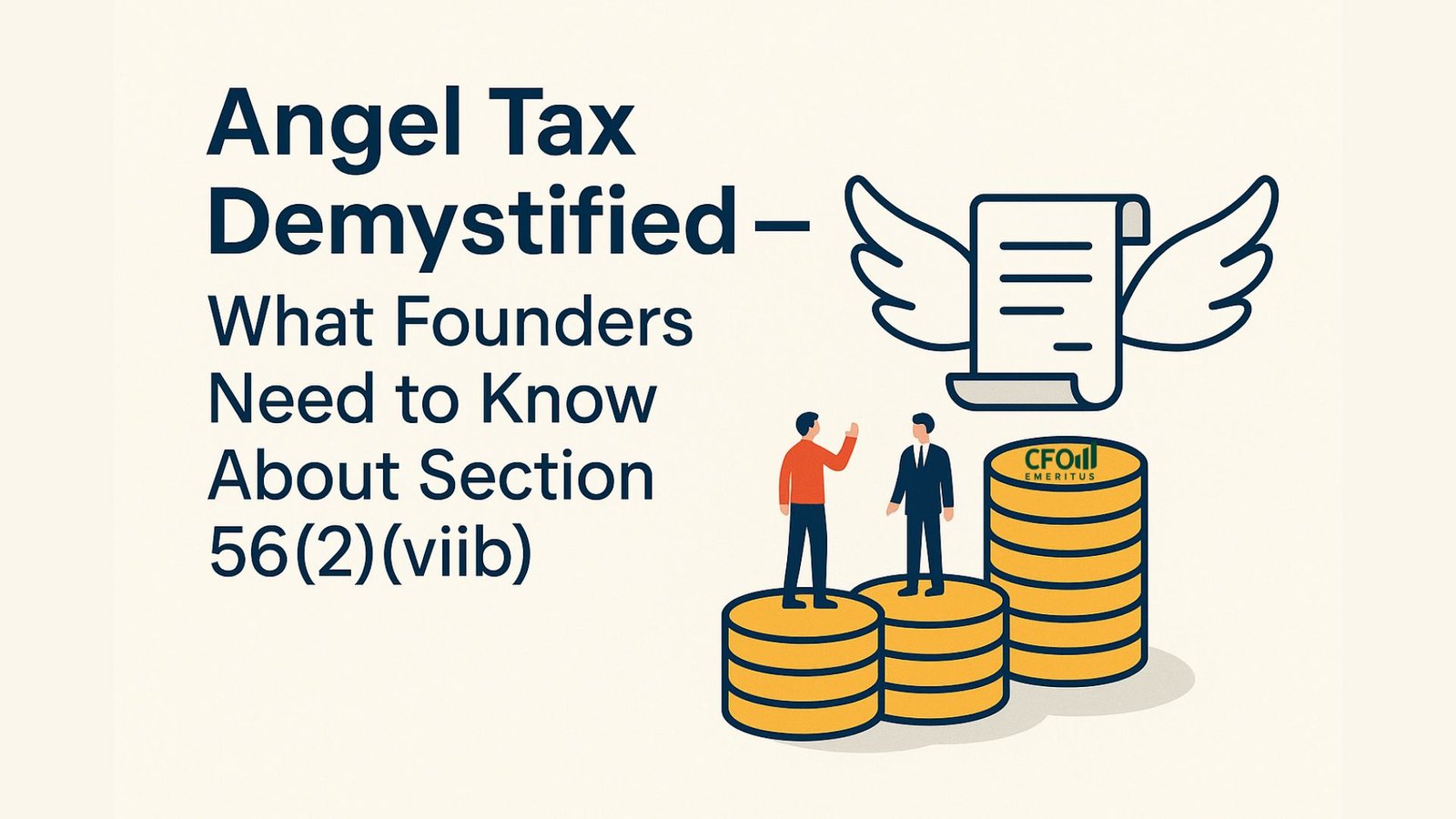
But here’s the truth: Angel Tax isn’t about taxing angels — it’s about how your startup is valued.
Let’s simplify it. 👇
💡 What is Angel Tax?
Section 56(2)(viib) of the Income Tax Act says:
If a closely held company (like a startup) issues shares at a price higher than their fair market value (FMV), the difference is treated as income and taxed at ~30%.
Example:
👉 If FMV is ₹100/share, but you issue at ₹150/share, then ₹50/share is “income” and taxable.
🚀 Why Was It Introduced?
The government wanted to prevent money laundering through inflated share valuations.
But unfortunately, genuine startups often got caught in the net.
✅ Reliefs & Exemptions for Startups
-
DPIIT-Recognized Startups
If your startup is registered under Startup India (DPIIT recognition), you can apply for Angel Tax exemption. -
Exempt Investors
Certain categories of investors (VCs, SEBI-registered funds, etc.) are not covered. -
Valuation Methods
Startups can use DCF (Discounted Cash Flow) or Net Asset Value for valuation — both are recognized by law.
⚠️ Common Mistakes Founders Make
❌ Not applying for DPIIT exemption before fundraising
❌ Using unrealistic valuations without documentation
❌ Assuming all investors are exempt (they’re not)
❌ Poor record-keeping — no valuation reports or board approvals
🎯 Final Thought
Angel Tax can feel like a trap — but with the right compliance and recognition, you can avoid it entirely.
At CFO Emeritus, we guide startups through valuation, DPIIT recognition, and investor compliance so fundraising isn’t derailed by Angel Tax.
📩 Thinking about raising funds?
Let’s ensure you’re Angel Tax-proof.
Reach us at office@cfoemeritus.com